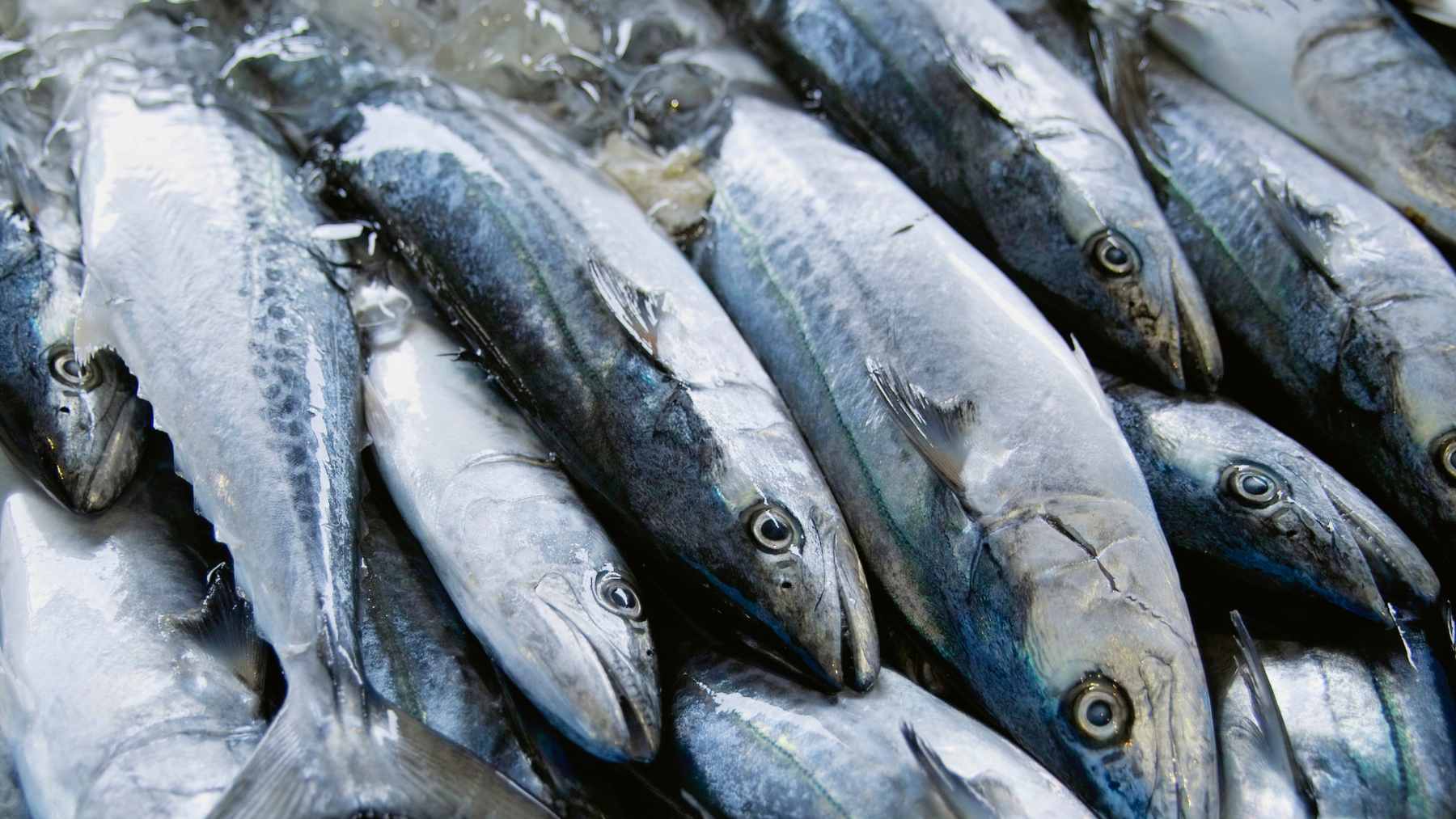
A fish can leave the water and end up in a supermarket case an ocean away, looking perfectly fine. But freshness keeps ticking down in the background, and buyers often do not know exactly where a product sits on that clock. Researchers at Hokkaido University say they now have a way to turn that guesswork into a live, predictive number.
Their new mathematical approach estimates the widely used “K-value” freshness index using basic inputs like species, storage time, and temperature, without needing to cut samples for lab testing.
If that holds up outside the lab, it could push seafood into the same data-driven era that already reshaped everything from shipping routes to inventory planning. And yes, it could also mean fewer sad surprises when dinner finally hits the pan.
A number that can move a market
“Freshness of fish and shellfish begins to deteriorate immediately after death,” Associate Professor Naoto Tsubouchi of Hokkaido University said, and tracking those changes across modern distribution networks is hard.
That uncertainty shows up everywhere, from seafood counters and fishmongers to supermarkets, convenience stores, and conveyor-belt sushi restaurants.
The stakes are not small. The UN Food and Agriculture Organization reported global fisheries and aquaculture production hit 246.5 million tons in 2022, which helps explain why even incremental efficiency gains can matter.
Seafood also travels through a massive trading system where value depends on quality, timing, and trust. FAO’s GLOBEFISH service estimated total import value for fisheries and aquaculture products at $164 billion in 2024, down from prior years, but still enormous.
From lab sampling to real time
The study, published Jan. 20, 2026 in the Journal of Food Engineering, frames the problem through a basic fact of postmortem biology and tests the approach on Atka mackerel. “When a fish dies, the ATP stored in its muscle tissue undergoes sequential decomposition,” Tsubouchi explained, and the team used that process to create a mathematical model.
Basically, the system estimates the K-value using information that is already easy to capture in a cold chain. Hokkaido University says the model can run on inputs such as fish species, storage time, and temperature, producing an estimate that can be updated as conditions change.
More than 60 years ago, researchers at Hokkaido University proposed a freshness index based on the K-value, and it is now used globally. That matters because conventional K-value testing typically requires taking tissue samples and analyzing them in a lab, which is slow and destructive.
The new approach is designed to be non-destructive and potentially usable in real time, which is a very different operating model for the seafood business.
Freshness and flavor share the same timeline
ATP is often described as a cell’s energy currency, and fish muscle carries it too. After death, ATP breaks down step by step into other compounds, which is why it can be modeled mathematically rather than treated as a black box.
Hokkaido University notes that this same pathway is tied to taste, not just spoilage. One mid-path compound, inosinic acid (IMP), is associated with umami flavor, while later-stage compounds can be linked to bitterness and off-odors.
So the pitch is bigger than “is this fish still okay.” The model could also help estimate when a product is at its best, which could influence how a retailer or restaurant decides what to serve raw, what to cook, and what to discount quickly. It is a small shift on paper, but it changes the conversation.
What changes for seafood businesses
A reliable freshness forecast would be a new kind of logistics signal. Hokkaido University says the model could support monitoring systems that estimate remaining shelf life and improve decisions on pricing, storage, and transport, especially as exports and long-distance distribution expand.
This is also, at heart, a food waste story. UNEP’s Food Waste Index Report 2024 estimates 1.05 billion metric tons of food waste in 2022 across retail, food service, and households (about 1.16 billion U.S. tons), equal to 19% of food available to consumers, with an average of 79 kg. per person (about 174 lbs.).
Seafood is high value, highly perishable, and often shipped under tight temperature constraints. If a model like this can reduce unnecessary disposal, or simply prevent one extra batch from expiring in a backroom cooler, the economics add up fast. Anyone who has stared at an electric bill for a refrigerated facility will tell you cold storage is not cheap.
Sensors, standards, and the trust problem
The researchers say they see the future in sensor devices and automated freshness monitoring, and they have patented related aspects of the technology in multiple countries. That is an important detail because it signals this is meant to move into products, not sit in a journal forever.
Still, a mathematical forecast is only as good as the data feeding it. Temperature logs can be wrong, shipments can be delayed, and fish lots can be mixed, so deployment will likely hinge on rugged sensors and clear handling rules. Who audits that data when money is on the line?
There is also the human factor. Fish buyers have relied on sight, touch, and smell for generations, and a single number will not automatically override experience. If a dashboard says “fresh enough” but a buyer’s nose says otherwise, which one wins in a contract dispute?
What to watch next
The study reports that predictions closely matched lab-measured freshness values across multiple species, including mackerel, and that “a single model structure can be applied across multiple fish species” while maintaining accuracy.
The next test is whether that holds at scale, in real shipments, across the temperature swings and handling quirks of everyday commerce.
If it does, the business implications are straightforward: more transparency, better routing, smarter pricing, and less waste, all built on a biochemical process that was already happening inside the fillet. A small equation can become a big lever. For now, it is a reminder that “fresh” can be modeled, not just judged.
The official statement was published on Hokkaido University.