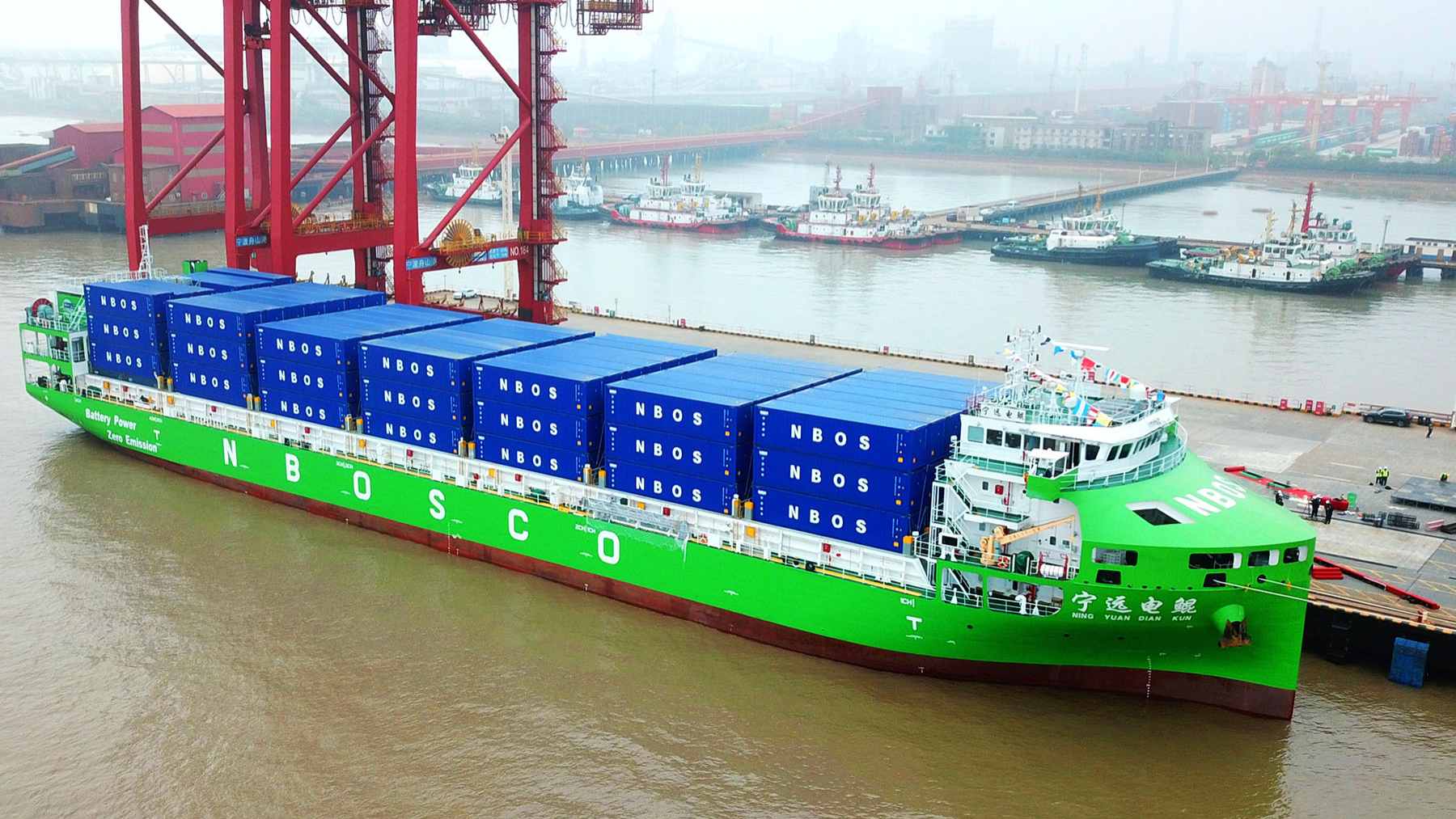
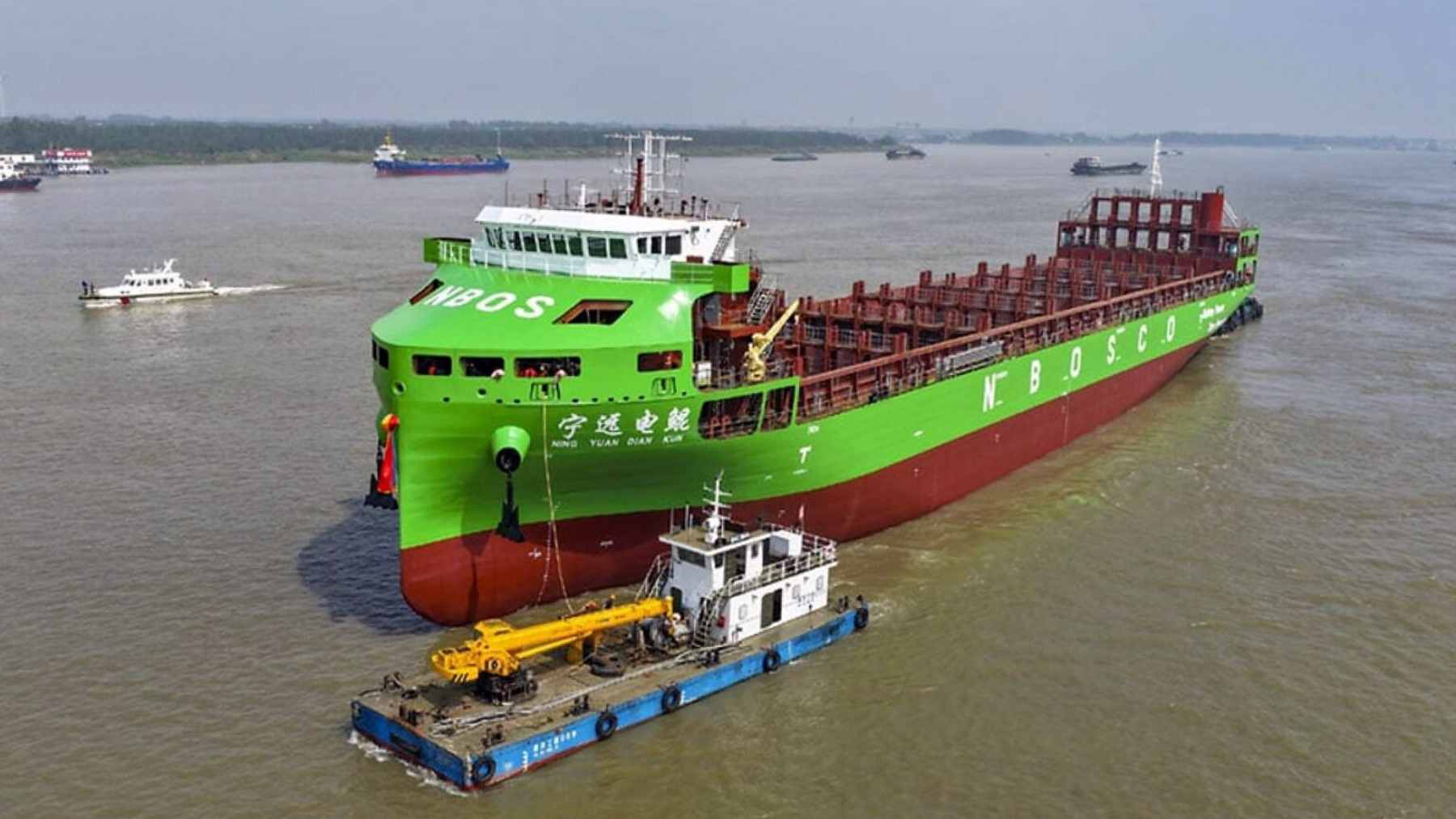
Ports usually smell like fuel, and on a sticky day you can almost taste it. China just put a different kind of workhorse into service, a 10,000-ton-class container ship that runs on batteries and is operating between Ningbo-Zhoushan and Jiaxing in Zhejiang province.
It is called the Ning Yuan Dian Kun, and China Classification Society describes it as the world’s largest pure electric intelligent seagoing vessel.
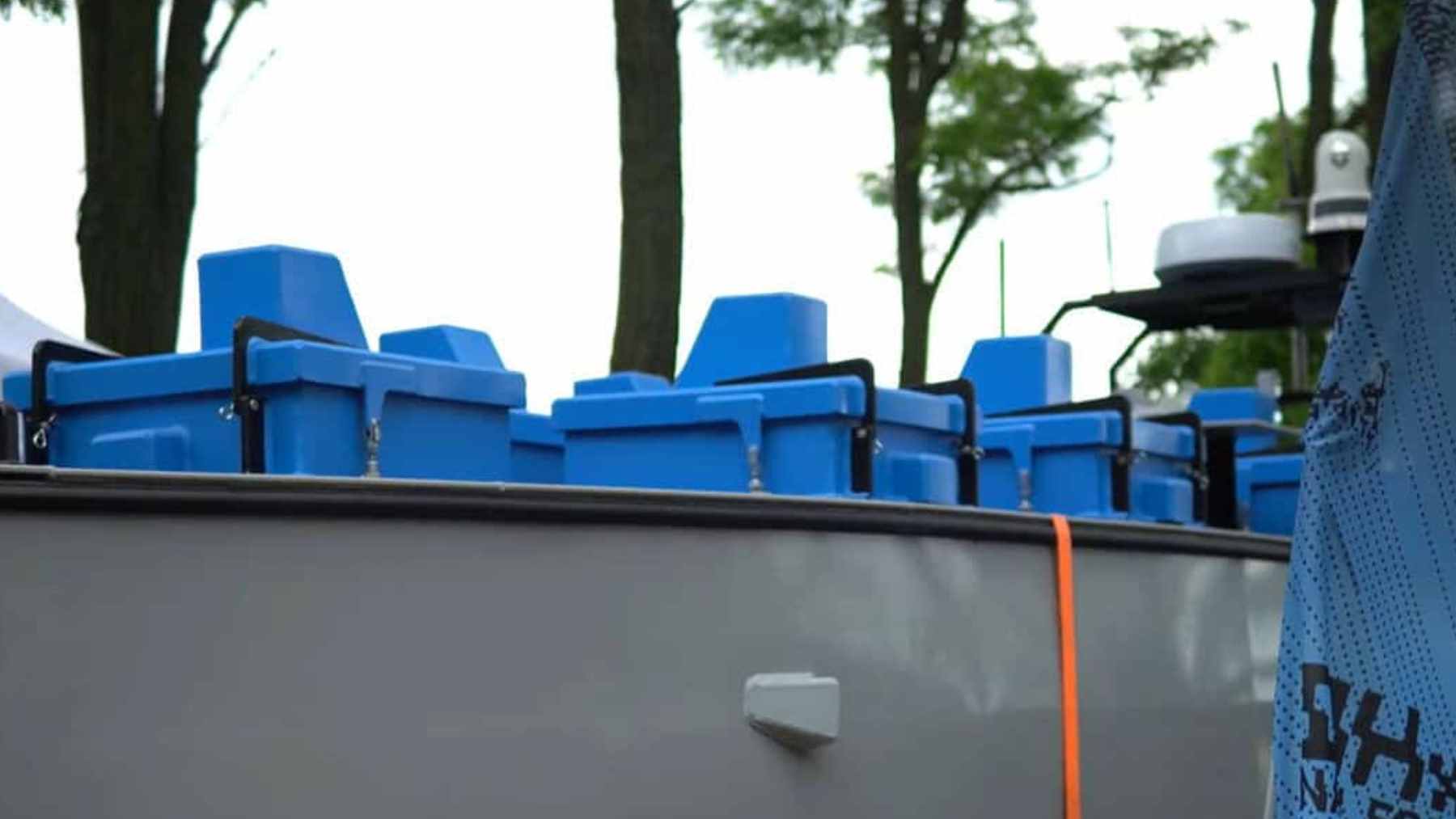
Its 10 container-sized battery modules store about 19 megawatt hours of energy and can be recharged from high-voltage shore power or swapped out at the dock.
For a sector that produces roughly 2% to 3% of global CO2 emissions, this is what decarbonization looks like when it leaves the pilot phase. It also sends a message: the next port competition may be about electricity and software, not just cranes and water depth.
A battery ship built for real schedules
Ning Yuan Dian Kun is already on the clock, not sitting in a showroom. CCS says the 740 TEU open-top ship is 127.8 meters long, uses a twin engine and twin propeller layout, and reaches about 11.5 knots. It was built by Jiangxi Shipbuilding for Ningbo Ocean Shipping, which plans to run it as a working feeder.
The route is part of the story. Maritime trade reporting puts the Ningbo-Zhoushan to Jiaxing run at roughly 70 nautical miles, the kind of short corridor where vessels cycle through ports constantly.
That predictability makes batteries realistic because the ship can recharge or swap packs on a schedule instead of relying on long-range endurance.
Then there is the emissions claim that stands out. CCS estimates about 1,462 tons of carbon dioxide avoided per year versus a conventional vessel on the same job, and it points to lower noise and vibration. If you have ever lived near a busy waterfront, you know why that matters.
The tech behind the headline
Battery swapping is the feature rivals will watch. CCS says the energy system is built around containerized battery modules and supports both high-voltage shore charging and rapid swapping, cutting idle time at the berth. It is a simple idea with big implications–ships start to look like devices with replaceable power packs.
The propulsion package is straightforward, but tuned for efficiency. The ship uses two 875 kW permanent magnet synchronous motors, and design details reported by maritime outlets say the bow shape trims wind resistance by about 15% to 20%. Small gains add up in shipping because the math runs nonstop.
The software layer is harder to see but just as important. The vessel is marketed as “intelligent,” with collision avoidance and ship-shore cloud control, and CCS says it carries ‘i’ ship notations for intelligent capability.
That should improve situational awareness and operations, but it also widens the surface area for cyber and system failures, a tradeoff ports and navies both take seriously.
Business pressure is building
This launch lands as regulators tighten the screws. The IMO’s 2023 greenhouse gas strategy aims for net-zero emissions from international shipping “by or around” 2050 and calls for at least a 40% cut in carbon intensity by 2030, along with early targets for zero or near-zero fuels.
In the EU, maritime shipping entered the emissions trading system in 2024 and FuelEU Maritime started applying in 2025, which makes cleaner port calls more than a nice headline.
The business case for coastal electrification is easy to sketch. Operators trade fuel purchases for electricity contracts, and battery swapping can reduce turnaround time if ports standardize equipment and procedures. The harder part is that scale, grid upgrades, charging gear, and battery supply chains all have price tags that eventually show up in port fees.
Norway shows why short routes tend to lead. European reporting notes Norway was operating roughly 70 battery/electric ferries by 2024, more than half its ferry fleet, because fixed crossings make charging predictable. A feeder container ship is a different beast, but the logic is similar: start where the plug is close by and the timetable is strict.
Ports are strategic infrastructure again
A cleaner feeder ship is not just about carbon, it is about resilience. A port that can deliver high-power charging and manage battery swapping becomes an energy hub, which can be a strength and a vulnerability at the same time. Fewer fuel deliveries and less smoke can also matter when the goal is to keep logistics moving during disruption.
You can see the geopolitics in how countries treat ports and bases. In Peru, the U.S. State Department approved a potential $1.5 billion foreign military sale tied to design and construction work at the Callao Naval Base, and Reuters reported the move would support expansion at the commercial port and help it compete with the Chinese-built Chancay port.
Different ocean, same lesson–strategic logistics is a blend of commerce, defense, and infrastructure.
For now, the takeaway is that shipping’s clean transition is starting where the schedule is predictable and the plug is nearby. Will battery swapping become a standard feature of short sea trade, or will other fuels win as routes get longer and cargo gets heavier?
The official statement was published on China Classification Society.