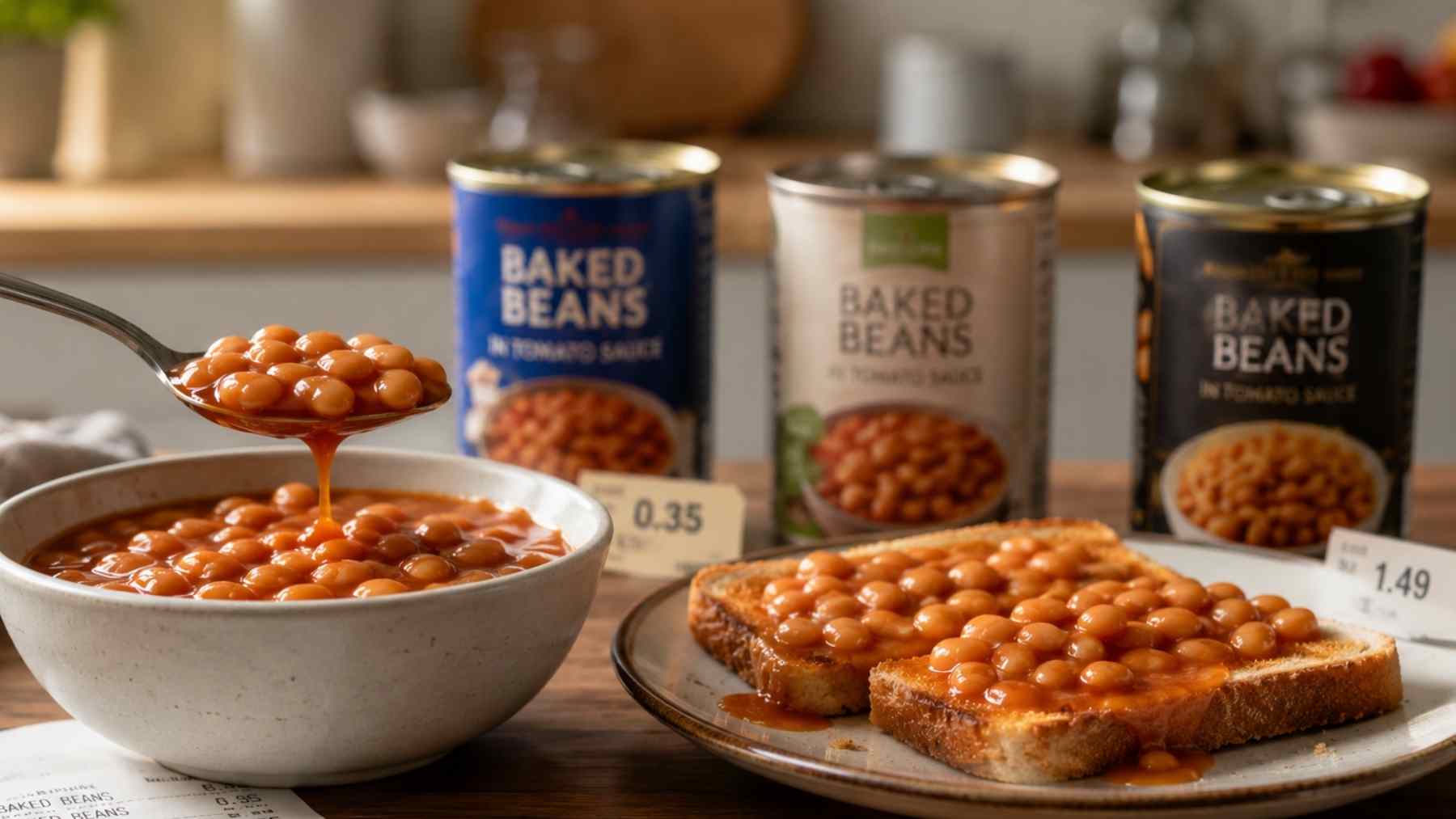
Reaching for Heinz may feel like the safe choice, especially when baked beans are one of those pantry staples people buy almost without thinking. But a new Which? blind taste test found that two supermarket own-brand cans, Aldi Bramwells and Lidl Newgate, edged ahead of Heinz while costing far less. Which? tested 12 cans with 60 tasters, and Aldi and Lidl both scored 77 percent, compared with 76 percent for Heinz.
That tiny one-point gap matters because the price gap is not tiny at all. Aldi and Lidl were listed at 40p, about 54 cents, for a 14.5-ounce can, while Heinz was £1.40, about $1.88, for a 14.6-ounce can at the current midmarket exchange rate. For anyone watching grocery costs and trying to build more fiber into daily meals, the real story is not brand loyalty. It is the label on the back of the can.
Why the cheaper cans won
Which? did not ask people to rate packaging or brand names. The cans were blind-tasted, tasters sat in private booths, and the final score was based on flavor, appearance, aroma, and texture. In other words, the familiar logo on the shelf did not get a head start.
That matters. Beans are one of those foods where expectation can do a lot of work, especially when the same brand has been sitting in the kitchen cabinet for years. Could a cheaper can really taste better? In this test, yes.
Aldi’s beans were praised as an “excellent all-rounder,” while Lidl’s were described as good-looking and flavorful, with texture that panelists liked. Branston followed at 74 percent, while Asda and Sainsbury’s scored 73 percent. Co-op landed at the bottom with 57 percent, with panelists finding its flavor too weak.
The nutrition catch
Baked beans can be a useful shortcut when lunch needs to happen fast. Which? notes that a half-can serving supplies nearly 10 grams of protein, along with fiber, and about 170 calories. They are also virtually fat-free and vegan-friendly.
But the tomato sauce can quietly add sugar and sodium. In the Which? results, the top-ranked Aldi beans listed 4.9 grams of sugar and the equivalent of about 212 milligrams of sodium per 3.5 ounces, while Heinz listed 4.3 grams of sugar and about 236 milligrams of sodium for the same amount. That does not make beans “bad.” It just means the can is a package deal.
The FDA says the Nutrition Facts label can help shoppers choose foods higher in dietary fiber and lower in sodium and added sugars. Its daily values are 28 grams for fiber, 2,300 milligrams for sodium, and 50 grams for added sugars, based on a 2,000-calorie diet. That is the kind of fine print worth reading before the can goes into the cart.
How to shop smarter
The healthiest choice is not automatically the cheapest or the most expensive. Start with three checks, sodium, added sugar, and serving size. A can that looks similar on the front may look very different once you compare the numbers per serving.
Also compare the price per ounce, not just the price per can. A slightly larger can can look cheaper until the math changes, and anyone feeding a family knows those small shelf-label numbers can decide the weekly food bill. Not glamorous, but useful.
Lower-salt and reduced-sugar versions may be worth considering if baked beans are a regular meal in your house. Which? notes that several supermarkets sell own-brand versions, and Heinz and Branston also offer reduced-sugar options with lower salt levels than their standard cans.
Where beans fit into a healthy meal
Beans work best when they are treated as part of a meal rather than a meal that does all the work. Put them on a baked potato with salad, spoon them beside eggs and vegetables, or serve them with whole-grain toast if that is your comfort plate. Simple food can still be smart food.
The current Dietary Guidelines for Americans place the emphasis on whole, healthy foods and limiting highly processed foods, added sugars, and refined carbohydrates. That does not rule out a convenient can. It does mean the rest of the plate matters.
Could a 54-cent can be part of a good lunch? Absolutely, for most people. But the win is stronger when the meal brings in extra vegetables, water instead of a sugary drink, and enough protein to keep you full.
The bigger takeaway
This result is a reminder that healthier everyday choices are often less flashy than supplements or trendy superfoods. Sometimes they are about buying the affordable pantry item that helps you cook at home more often.
For the most part, Aldi and Lidl did not win because they were “health foods.” They won because tasters liked them, they were cheap, and their nutrition profile was broadly similar to the bigger brand in the same test.
If you already love Heinz, the results do not say you must stop buying it. But if you grab it out of habit, the cheaper cans may be worth a place in the cart. Small swaps add up.