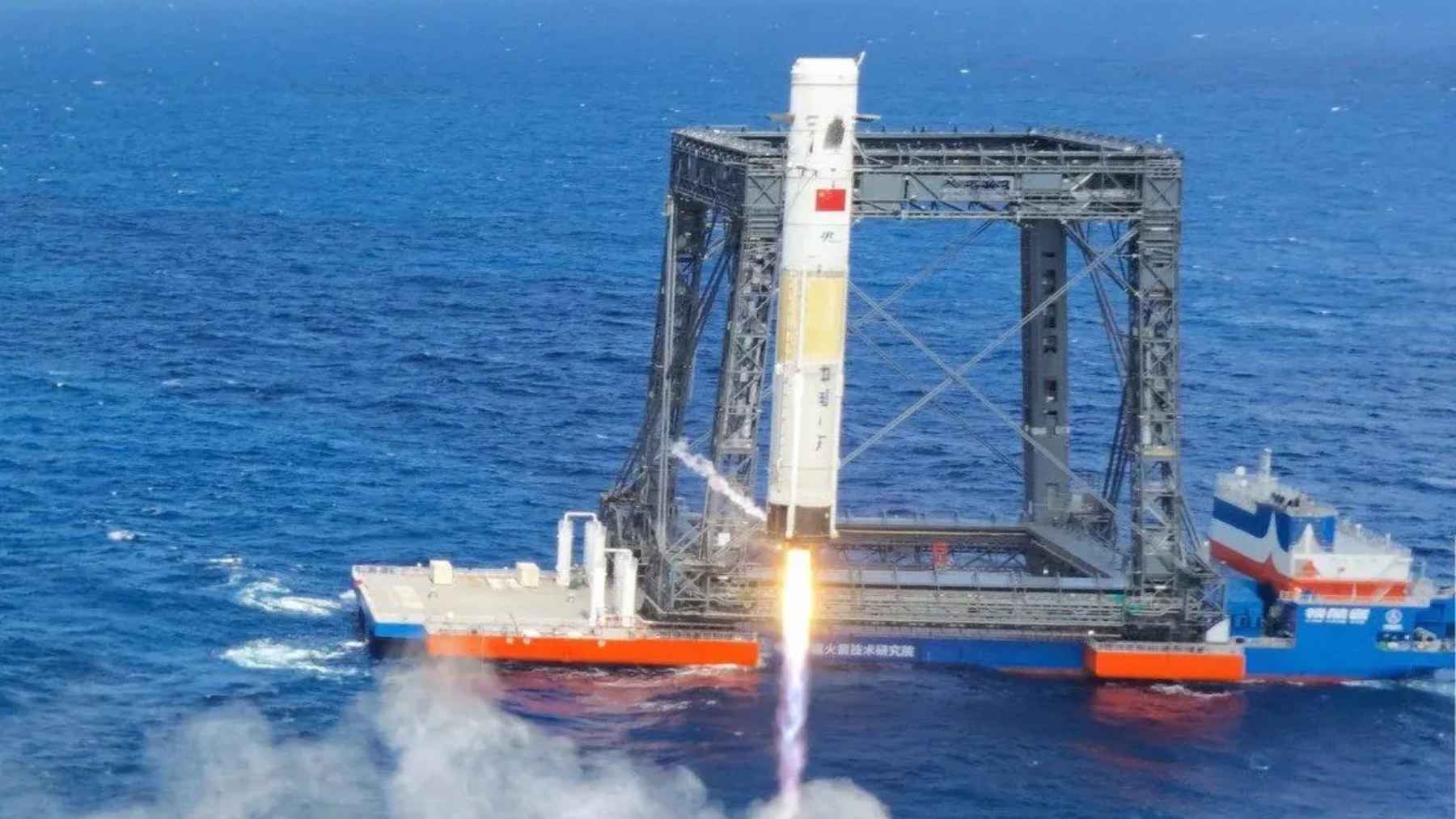
China has recovered the first stage of its Long March 10B after an orbital launch, catching the descending booster in a giant sea-based net instead of setting it down on landing legs. The July 10 flight placed a satellite in orbit and delivered China’s first controlled recovery of a carrier rocket’s first stage. Officials also called it the world’s first sea-based net capture of a launch vehicle.
It is an important step toward cheaper, faster access to orbit. Catching a rocket does not make spaceflight clean by itself, because the answer depends on how many times the booster flies again, how much support its recovery requires, and what its engines release high in the atmosphere.
A rocket caught at sea
The Long March 10B lifted off 15 minutes after noon local time from the Hainan Commercial Space Launch Site. About six minutes later, its first stage returned vertically toward the recovery ship Linghangzhe, where four hooks on the booster engaged a cross-shaped, flexible net. The booster stands roughly 207 feet tall, and the ship was moving as the ocean rolled beneath it.
The system combined live position, speed, and attitude data from the rocket and the ship. China’s state news agency said the platform also used lidar, specialized cables, and an automated process to complete the catch. The China National Space Administration called the result a “major breakthrough in reusable rocket technology.”
What China proved
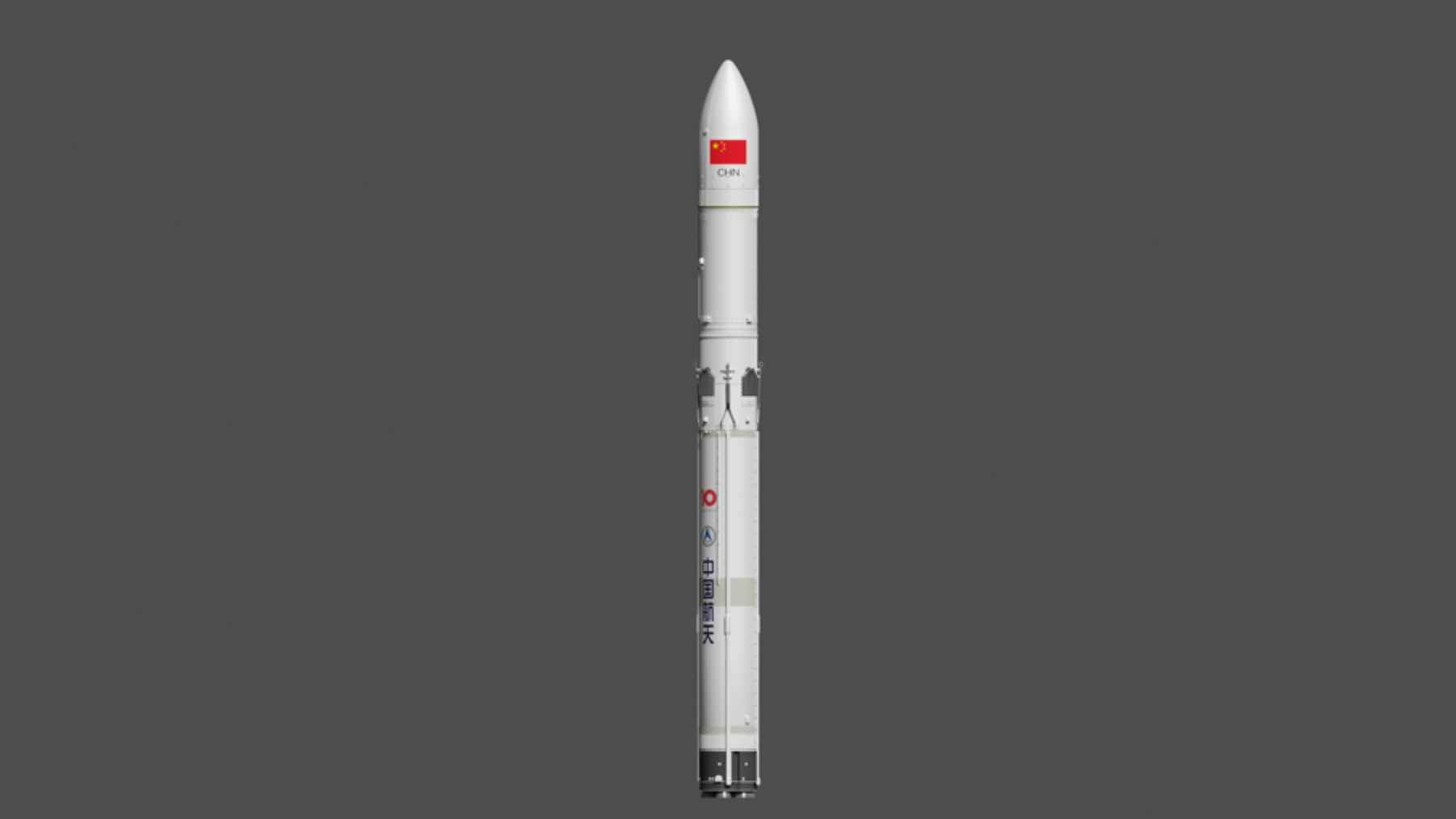
The two-stage rocket is about 207 feet tall and 16.4 feet wide. In its reusable configuration, it is designed to carry about 35,300 pounds to an orbit roughly 124 miles above Earth, with the first stage burning liquid oxygen and kerosene and the second using liquid oxygen and methane.
Still, recovery and reuse are not the same thing. The booster has now been returned intact, but engineers must inspect heat damage, structural loads, engines, plumbing, and avionics before proving that it can safely fly again. The project team has said it aims to relaunch the recovered stage before the end of 2026.
Why the net matters
SpaceX’s Falcon 9 and Blue Origin’s New Glenn land on legs, while China’s new system moves part of that job onto the ship. Removing landing gear can simplify the booster, cut weight, and leave more capacity for payload, according to Long March 10B technical expert Chen Muye. He said net recovery “simplifies the onboard structure, reduces weight, and boosts payload capacity.”
That trade is clever, but it does not make complexity disappear. China’s detailed recovery account said eight vessels took part, covering towing, command, support, supplies, and security because Linghangzhe has no propulsion of its own. Part of the rocket’s burden has shifted from the launch vehicle to a maritime operation.
The business case
Reusable launchers can spread the cost of expensive hardware across several missions instead of discarding it after one flight. Long March 10B is aimed at low-Earth-orbit satellite networks and large commercial spacecraft, markets where launch cadence and price can matter almost as much as raw performance.
China has joined the recovery race, but it has not yet matched the operational record of U.S. companies.
SpaceX completed the first reflight of an orbital-class rocket in 2017, while Blue Origin landed New Glenn’s reusable first stage in November 2025 and designed it for at least 25 missions. The next contest is less cinematic than a first landing but more important for customers, since it is about inspection time, reliability, and the price of each flight.
The environmental tradeoff
Reusing a first stage can reduce the number of large rocket bodies dumped into the ocean and may lower the demand for newly manufactured hardware. That is the most visible environmental benefit, much like reusing a sturdy bottle rather than throwing it away after one drink.
Even so, a proper comparison has to include manufacturing, fuel production, launch operations, recovery ships, repairs, and eventual disposal.
The engines also matter. Long March 10B’s returning first stage burns kerosene, and research has found that black carbon from rocket exhaust can remain in the stratosphere, absorb sunlight, and warm the surrounding air. Scientists still face major uncertainty because emissions at those altitudes behave differently from pollution near the ground.
Then there is the rebound problem. Cheaper launches could encourage a much higher launch cadence, and a 2025 modeling study found that future launch growth could slow ozone recovery, with the outcome varying by traffic levels and propellant choices. Reuse may cut waste per mission while total environmental pressure still rises, so both things can be true.
A strategic shift
Reliable reusable rockets could strengthen China’s commercial satellite industry and reduce its dependence on one-shot launch hardware. They also carry strategic value because communications and Earth-observation systems increasingly depend on rapid, dependable access to orbit.
A successful recovery gives Beijing another tool, but regular reflight would be the real capability leap.
For SpaceX, Blue Origin, and emerging launch companies elsewhere, the net catch is a reminder that reusable technology is no longer a single-country experiment. China is testing a different engineering route, one that could work especially well if it proves tolerant of rough seas and small landing errors. That “if” matters.
The real test comes next
The recovered booster has been taken back for a detailed examination, where engineers can compare real flight damage with their models. How many parts need replacement, how quickly can the stage return to service, and what does that process cost?
Those answers will determine whether the catch becomes a repeatable business system or remains a remarkable demonstration.
The environmental verdict must wait for the same evidence. A booster that flies many times with limited refurbishment could save material and money, while a recovery system that needs heavy repairs and a large support fleet may deliver a smaller gain than the dramatic footage suggests.
The recovery account was published on China Aerospace Science and Technology Corporation.