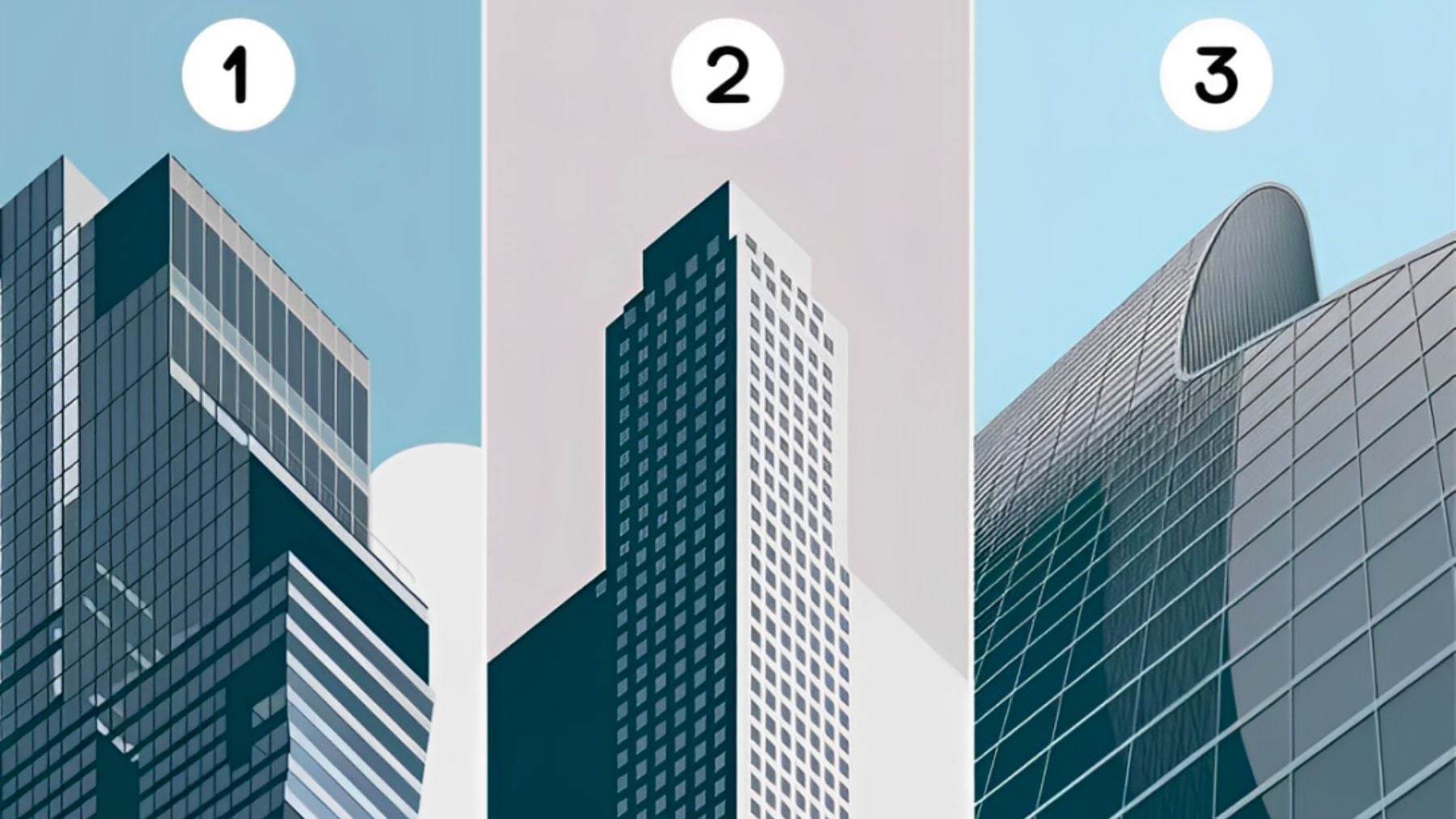
Are you curious about which hidden fear may be subtly steering your decisions? Often, our most profound anxieties emerge in unexpected ways, influencing even the visual symbols we instinctively attract. This simple test, similar to this visual quiz, may offer a surprising clue into the interplay between subconscious impulses and emotional well-being.
Select the structure with which you feel most connected from the image above and discover what your instinctive response reflects. Keep in mind that this is intended solely for self-reflection and amusement, not as a substitute for a clinical evaluation or formal psychological assessment.
The building personality test
Examine the image featuring three distinctive structures that blend varying styles of urban architecture and modern design. Do not overanalyze your reaction; instead, trust the spontaneity of your first impression. Which building captures your attention immediately? Choose the one that draws you and read the matching description below.
If you chose building #1
This formidable structure often resonates with those who experience acrophobia, a specific fear of heights intertwined with modern anxieties. Your selection might be hinting at an underlying apprehension about losing control, especially in high-pressure situations that demand both emotional and physical equilibrium.
This might show that you’re a bit afraid of failing when you go after big dreams or take big risks. It’s not just about heights—you might struggle with ambition and risk-taking. Think of this building as a symbol of the pressure you feel when reaching for high goals, whether in your personal life or your career. If you lean toward stability, it could mean you naturally seek security rather than facing the uncertainty that comes with change.
If you chose building #2
This more enclosed structure is often linked to a fear of the unknown and feelings of being boxed in. If you picked it, you might be dealing with an underlying worry about feeling confined, whether it’s in your physical surroundings, your emotional life, or tough situations you’ve faced.
Think of it like this: environments that seem unpredictable, restrictive, or like there’s no way out can really trigger a sense of stress and discomfort. This response might even echo past experiences where you felt trapped or overwhelmed by intense emotions, showing just how complex handling uncertainty can be.
If you chose building #3
This building, with its distinct facade, is linked to scopophobia, a fear of being watched or judged. If you choose this building, it might show that you feel especially sensitive to others’ opinions, whether in social situations, at work, or just in everyday life.
The mystery behind its windows can symbolize the uncertainties in your personal or career journey, hinting that you may worry about living up to expectations or being misunderstood. In these moments, keeping a bit of emotional distance might feel like the safest way to protect yourself.
So, which building resonated with you? Although this brief test is not a scientific instrument, it can serve as a catalyst for introspection and personal insight. If the interpretation strikes a chord, observe when that specific fear surfaces in your daily experiences. Recognizing recurring patterns in your emotional responses is an essential first step toward deeper self-awareness and growth.