Ever notice how a stressful moment can make you reach for something sweet, even if you ate not long ago? A new study in fruit flies suggests that link between hunger and the brain is not just a feeling, and it may be tied to how memories become long-lasting.
Researchers found that sugar intake can act like a biological “save button” after learning. In their experiments, a tiny set of sugar-sensing brain cells helped turn a short experience into a memory that lasted, but only if sugar showed up at the right time.
Memory consolidation in plain language
Memory consolidation is the step where the brain takes something you just learned and stores it more permanently. Think of it like saving a game so you can come back to it later, instead of losing everything when you turn the console off.
This process is not free. Building a stable memory usually takes extra work inside brain cells, and that work needs fuel and signals to tell the brain the effort is worth it.
So where does sugar fit in? In this new work, eating sugar became one of those signals, helping the brain commit certain lessons to long-term storage.
What the researchers did with fruit flies
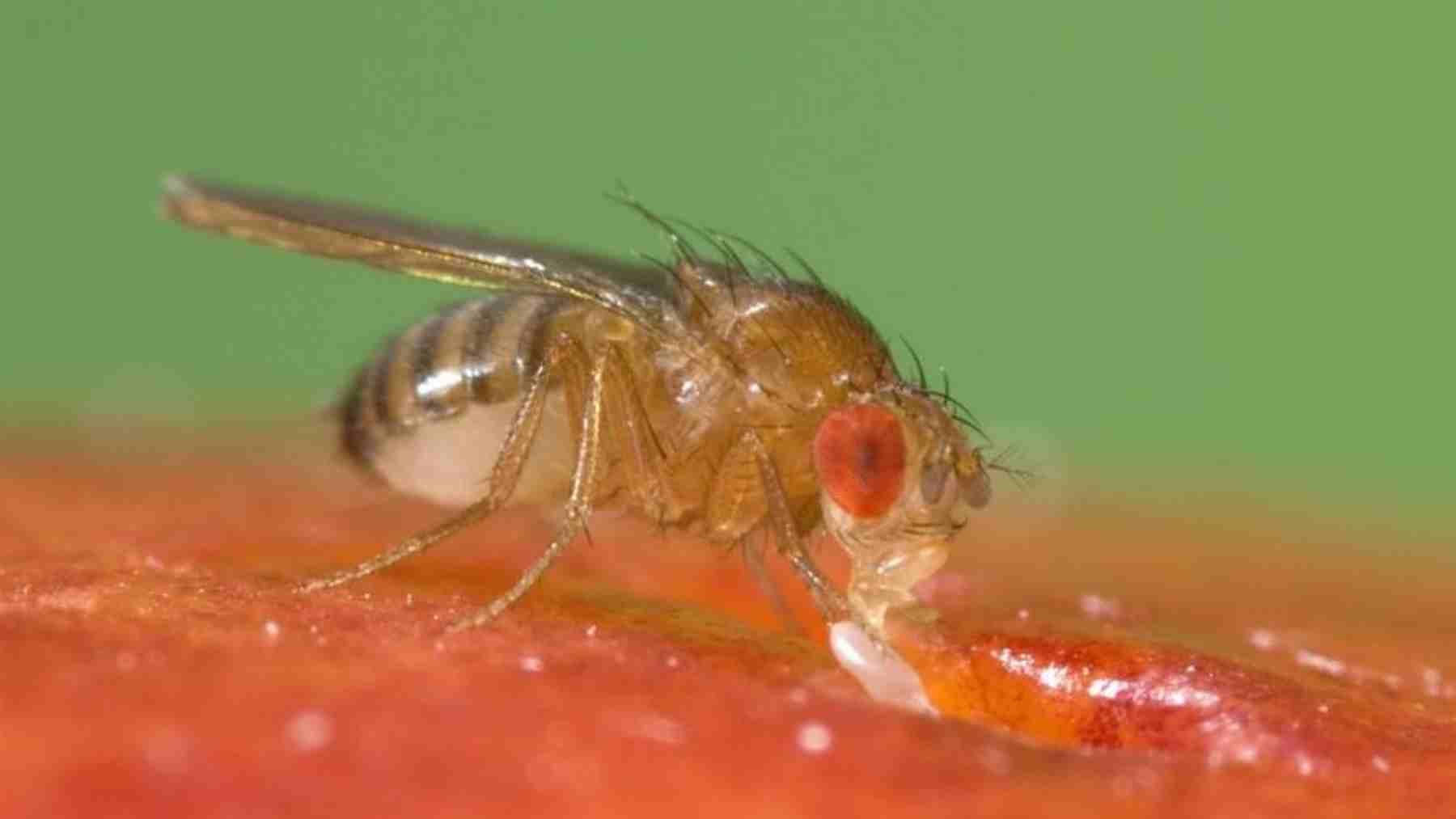
Fruit flies might sound far from human life, but they are a go-to model for brain research because their neurons are easier to map and manipulate. The scientists worked with a common lab species called Drosophila melanogaster, using smell-based learning to track memory.
The flies went through an aversive learning task, meaning they learned to avoid a smell linked with mild electric shocks. Some flies were trained in spaced sessions with breaks, while others got a more crowded, back-to-back version, and memory was checked the next day.
The study was authored by Raquel Francés and colleagues, with Thomas Preat and Pierre-Yves Plaçais supervising the work at the Brain Plasticity Unit in Paris, part of France’s National Center for Scientific Research. The results were published on March 25, 2026, in Nature.
Why spaced practice changed the brain
Spaced practice is the same idea teachers talk about before exams. Repeating a lesson with breaks in between tends to work better than cramming, and the fly brain shows a similar “spacing effect.”
In the new experiments, spaced training did more than strengthen learning. It briefly pushed a sugar-sensing circuit into a hunger-like mode, even when the flies had been eating normally, so a later sugar meal could trigger the memory “save.”
The researchers also reported that the same reset made the flies show stronger sugar preference and higher sugar intake for a time, a pattern they compared to “emotional eating” in its basic form.
Meet the Gr43a sugar sensor
The key players were neurons that carry a receptor called Gr43a, which responds to fructose. Fructose is a sugar found in fruit, and it can also appear after the body processes other carbohydrates, including glucose, so this sensor is basically listening for “sugar is coming in.”
Under normal conditions, these neurons act a bit like a hunger gate. When the fly is hungry, they respond to sugar and help drive eating, but when the fly is full, the response is turned down.
That hunger dependence has been on scientists’ radar for years. A 2012 paper in Cell showed Gr43a-expressing brain neurons can detect internal fructose and shift feeding behavior depending on whether the animal is hungry or satiated.
Sugar had to arrive at the right moment
Timing turned out to be everything. When flies ate sugar soon after spaced training, they were more likely to form a long-lasting memory of the “dangerous” smell, while cutting off food right after learning weakened that lasting memory.
Notably, sugar itself mattered. Feeding the flies sucrose, which most people know as table sugar, or glucose supported long-term memory, but a fat-rich option did not, suggesting the effect was not just about energy.
It is a little like needing the right key for the right lock. The brain was not simply “refueling,” it was getting a message.
A hormone-like messenger ties eating to remembering
Once the sugar sensor neurons were active, they released a hormone-like signal called thyrostimulin. This messenger helped carry the “we just ate sugar” information into the circuits that strengthen memories.
In everyday language, it is a relay. Sugar is sensed, a message is sent, and the memory machinery gets the green light to do the expensive work of consolidation.
This does not mean eating sugar makes anyone smarter, and the researchers are careful about that. But it does offer a concrete mechanism for how learning and metabolism can talk to each other inside a brain.
What this might mean beyond flies
The big takeaway is not that sugar is magic, but that the brain may sometimes “pretend” it is hungry to protect important learning. A related write-up described this as an internal trick that can boost sugar appetite even when the animal is already satiated.
This line of research fits into a broader push to understand how energy use shapes thinking, not just in insects. On its lab website, the team describes its focus on the underexplored connection between energy metabolism and memory formation, using fruit flies along with brain imaging and genetic tools.
The next step is the hard one, checking whether anything like this circuit exists in mammals. For now, the study is a reminder that memory is not just about the mind, it is also about the body and what it thinks it needs.
The main study has been published in Nature.