Quantum computing just took a big step out of the lab and into the real world. Researchers at Northwestern University have demonstrated quantum teleportation over a fiber optic cable that was already carrying regular high-speed internet traffic, a result that could bring the future quantum internet closer without forcing cities to rip up streets for a brand-new network.
That detail matters more than it may sound. If quantum communication can share the same cables we already use for emails, video calls, banking apps, and cloud services, the path to secure next-generation networks becomes cheaper, less disruptive, and potentially less wasteful. Not exactly sci-fi teleportation, but still a big deal.
A breakthrough in a busy cable
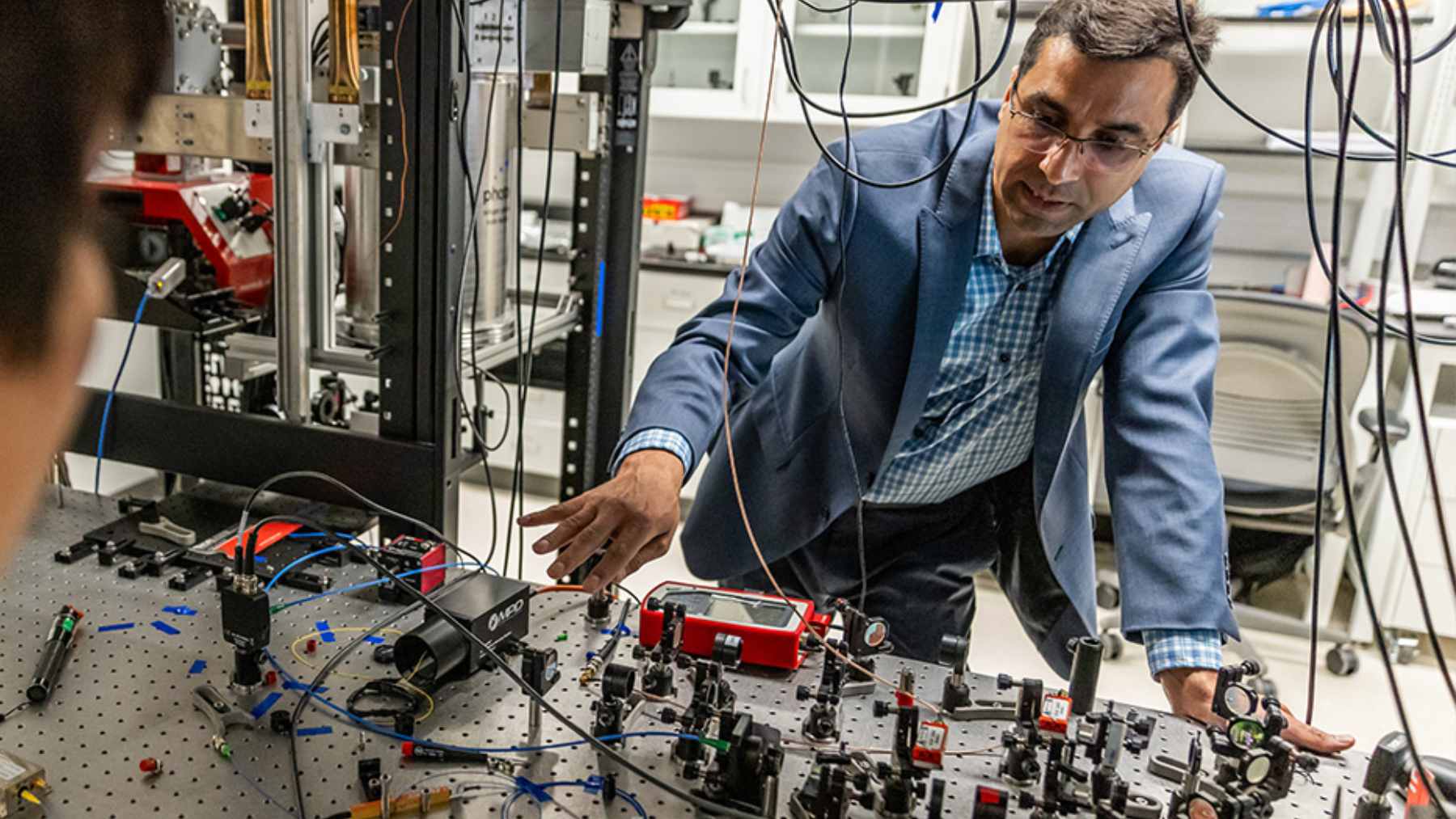
The Northwestern team sent quantum information through 18.8 miles of optical fiber while the same line carried 400-Gbps classical internet traffic in the C-band. According to the Optica paper, the experiment used a three-node, quantum-state teleportation system and a Bell-state measurement at the midpoint of the fiber.
In plain English, the researchers proved that a fragile quantum signal can survive in a cable full of normal internet light. That is the part many scientists were not sure could work, because quantum information relies on single photons, while ordinary internet signals involve huge streams of light particles.
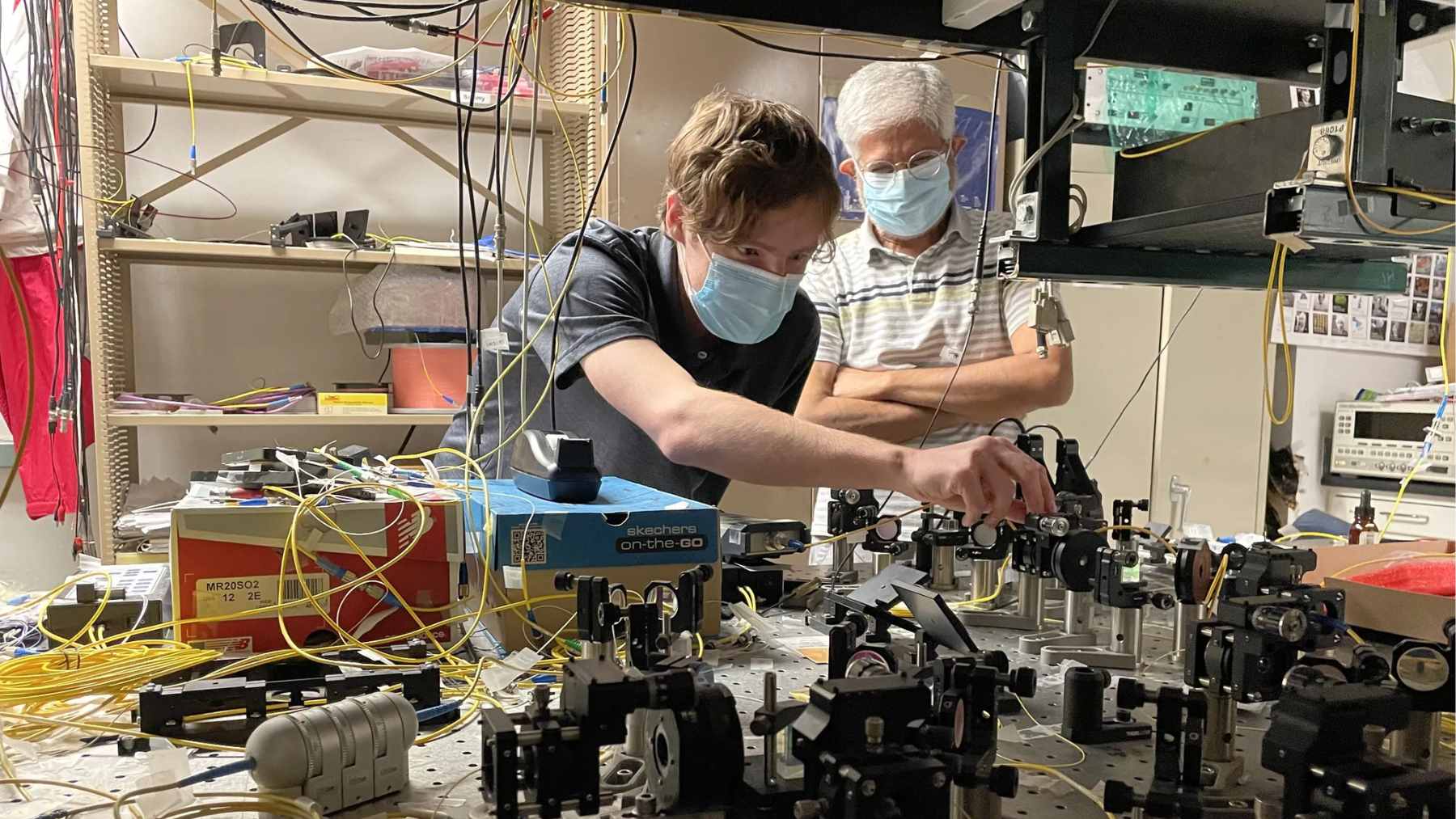
“This is incredibly exciting because nobody thought it was possible,” said Prem Kumar, the Northwestern professor who led the study. He added that the work points toward quantum and classical networks sharing one fiber optic infrastructure.
What teleportation really means
Despite the name, this is not about beaming people, packages, or phones from one place to another. Quantum teleportation means transferring the state of a quantum particle to another particle at a distance, using entanglement.
If that sounds abstract, it is. But the basic idea is simple enough: two particles become linked in such a way that information about one can be used to recreate a quantum state in the other, without sending the original particle all the way through the network.
For the most part, this is about data, not objects. The important unit is the qubit, which can represent more than just the 0 or 1 used by ordinary bits. That strange behavior is one reason quantum computers and quantum networks could one day tackle problems far beyond today’s machines.
Why the cable mattered
The toughest problem was noise. Regular fiber optic cables are crowded with light signals, and those signals can scatter inside the glass, creating interference that damages delicate quantum information.
Kumar’s team studied how light scatters in fiber and placed the quantum photons in a less crowded part of the spectrum. They also used special filtering to cut down the noise from regular internet traffic. In practical terms, they found a quieter lane inside a very busy highway.
That could be the greenest part of the story, though it should not be exaggerated. The study did not claim a measured climate benefit. Still, using cables already buried under streets and buildings could, to a large extent, reduce the need for duplicate infrastructure as quantum networks develop.
Why security experts care
A future quantum internet could make some forms of communication much harder to spy on without being detected. If someone tries to disturb or measure certain quantum states, the intrusion can change the signal itself.
That is why banks, hospitals, research labs, energy companies, and defense agencies are watching this space closely. Imagine critical grid data, battlefield communications, or medical research moving through systems where tampering leaves a trace. That is not the same as saying hacks disappear forever, but it would change the security game.
There is a business angle, too. If quantum systems can plug into existing fiber networks, companies may not need to build entirely separate lines just to test advanced applications. For cities already dealing with traffic jams, road work, noise, and construction dust, that is not a small advantage.
The bigger quantum race
Northwestern’s work builds on earlier milestones. In 2022, QuTech researchers in the Netherlands reported teleporting quantum information between non-neighboring nodes in a network, with an intermediate node helping the process.
Before that, in 2020, Fermilab and partner institutions reported sustained, high-fidelity quantum teleportation over 27 miles of fiber.
What makes the Northwestern result stand out is the messy, everyday setting. This was not only a protected quantum channel, it was quantum communication coexisting with conventional telecommunications traffic–the kind of traffic that keeps modern life running.
Still not a quantum internet
So, are we about to get a quantum internet at home? Not quite.
The experiment is a proof of principle, not a finished commercial network. Researchers still need to test longer distances, more complex network layouts, real-world buried cables, and larger systems that can work reliably outside the lab. Costs, stability, and scale remain serious hurdles.
But the direction is clear: if quantum communication can ride alongside today’s internet rather than replace it, the future network may arrive in a more practical way. Less digging, fewer new cables, more secure links.
The study was published by Optica Publishing Group in the journal Optica.